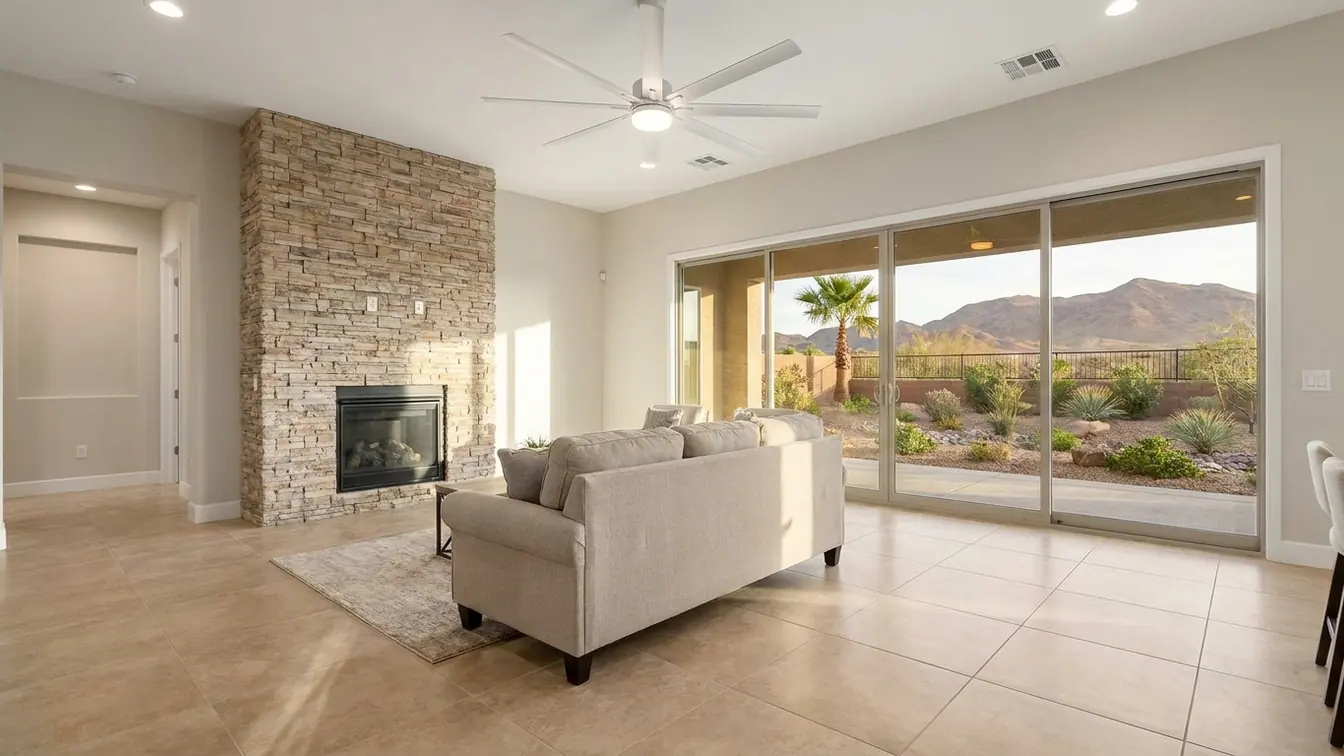
Match blade span to the room
Measure the room's length and width and multiply to get square feet. Then use this as a starting point:
- Up to 75 sq ft (bathrooms, laundry): 29 to 36 inch blades
- 76 to 144 sq ft (bedrooms, offices): 36 to 44 inch blades
- 145 to 225 sq ft (large bedrooms, kitchens): 44 to 50 inch blades
- 226 to 400 sq ft (living rooms): 50 to 60 inch blades
- Over 400 sq ft or two-story great rooms: a 60 inch plus fan, or two fans
Get the height right
Blades work best about 8 to 9 feet above the floor and should never be lower than 7 feet. On a standard 8 foot ceiling, a flush or low-profile mount keeps clearance safe. Taller ceilings need a downrod to bring the fan down into the room:
- 9 ft ceiling: about a 6 inch downrod
- 10 ft ceiling: about a 12 inch downrod
- 12 ft ceiling: about a 24 inch downrod
- 16 to 20 ft great rooms: a 48 to 72 inch downrod
- Sloped ceilings: an angled mount rated for the pitch
Pick the right rating for patios
Indoor fans are for indoor rooms only. A covered patio needs a damp-rated fan. Anywhere monsoon rain, misters or sprinklers can reach the fan, choose wet-rated. Desert sun and dust are hard on cheap blades and motors, so outdoor fans with UV-resistant blades and sealed motors last longest.
Set the direction by season
In summer, run the fan counterclockwise when you look up at it, so it pushes air down. In winter, switch it to clockwise on low to move warm air off the ceiling, which makes a real difference in tall great rooms on cold desert nights.
Need a hand with this?
Text a photo of the fan, fixture or panel and you'll get a price by text.